
Emergency Respiratory Protection Must Match the Worst Credible Emergency Scenario
Why Oxygen-Deficient Environments Create a Critical Gap in Emergency Preparedness
For a facility owner, emergency respiratory protection is not just an HSE purchase.
It is an operational risk decision.
Because if workers cannot evacuate safely during a real incident, the consequences go far beyond equipment cost.
A serious gas release, fire, confined space incident, or unknown atmosphere can put people at risk, stop operations, trigger investigations, and expose the facility to legal and reputational damage.
That is why the real question is not:
What respiratory protection do we have on site?
The real question is:
Does it match the worst credible emergency scenario at our facility?
When the Surrounding Air Becomes Unsafe to Breathe
For chemical and petrochemical sites, one of those scenarios can be oxygen deficiency.
If the surrounding atmosphere becomes unsafe to breathe, workers need respiratory protection that does not depend on that air.
This is where self-contained emergency escape breathing devices become relevant.
EmSCAPE generates its own oxygen through KO₂ technology and is designed to support evacuation in oxygen-deficient environments. It provides a 30-minute rated escape duration, has no high-pressure elements, and does not require annual or periodical service.
Emergency Preparedness Is About Reducing Blind Spots
For facility owners, the value is simple: not more equipment for the sake of equipment, but fewer blind spots in emergency preparedness.
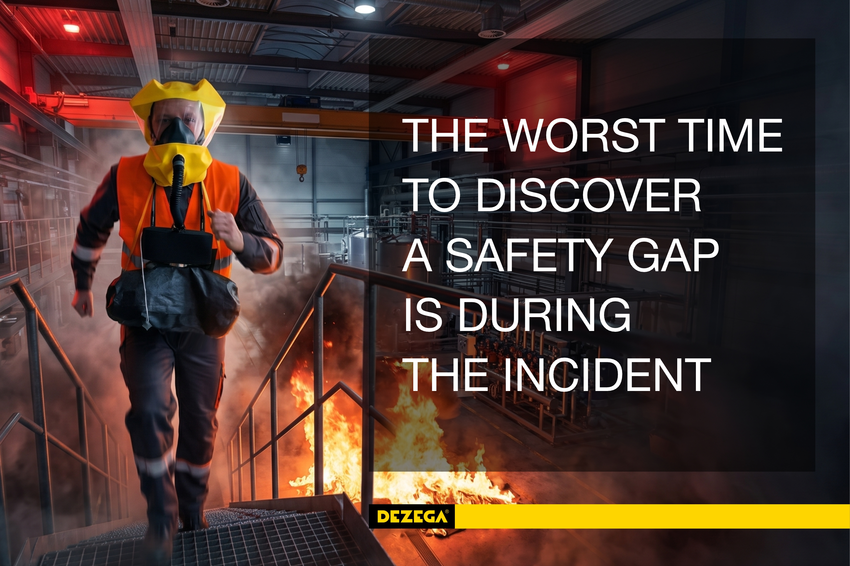
If the current emergency respiratory protection equipment does not cover the scenario where the surrounding atmosphere becomes unsafe, the facility may discover that gap only during an incident.
And that is the worst possible time to find out.